
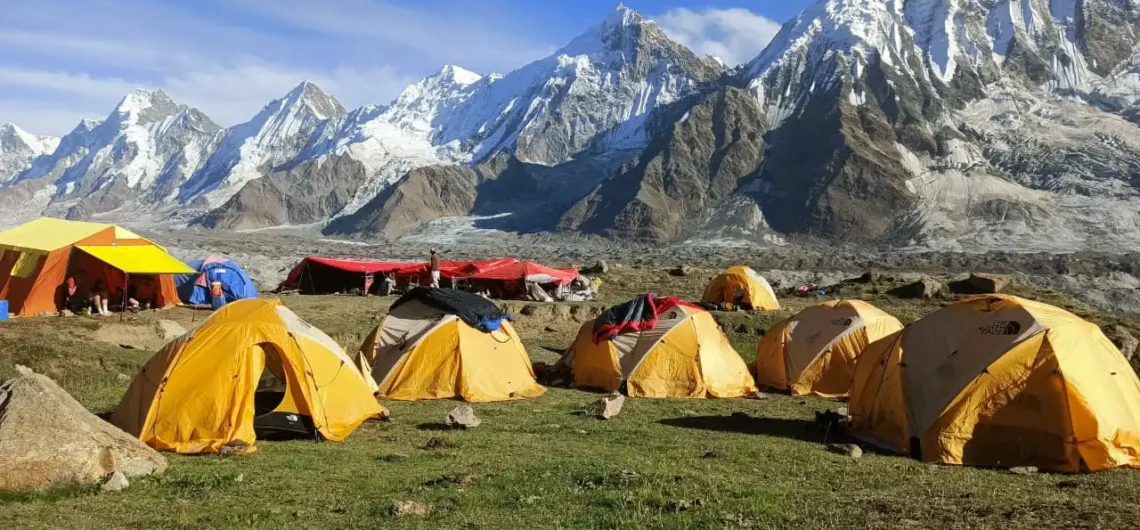
You’ve seen those photos. The ones with bright blue lakes and snowy mountains that look almost fake.
That’s Skardu. And it’s 100% real.
Let me show you why this place is special and why you should care.
What Makes Skardu Special?
Skardu is a city in Pakistan’s Gilgit-Baltistan region. It’s famous as the starting point for K2 climbs. It has stunning high-altitude lakes, huge valleys, and the world’s highest cold desert.
But here’s the thing: that short answer doesn’t do it justice.
Skardu sits 2,228 meters above sea level. That’s about 7,310 feet high. High enough to make you breathe a bit harder. But perfect for incredible views.
This isn’t just another mountain town. It’s where three of the world’s biggest mountain ranges meet. The Karakoram. The Himalayas. The Hindu Kush. All coming together in one spot.
Imagine giant icy peaks next to green river valleys. Then throw in sand dunes. Yes, sand dunes. At over 7,000 feet up.
Skardu is the capital of the Baltistan region. But climbers know it for something else. It’s your gateway to four of the world’s fourteen highest peaks. Mountains that rise above 8,000 meters.
For serious mountaineers, Skardu isn’t just nice to have. It’s necessary.
Where Mountains Meet History
The Geography That Changes Everything
Skardu is in northeastern Pakistan. The city spreads across a wide valley. Ancient glaciers carved it out thousands of years ago.
The city sits where two big rivers meet. The Indus River and the Shigar River. They join right here.
The Indus is huge. It starts in China and flows through Gilgit-Baltistan. This river is the lifeline of the region. Without it, this would be desert. With it, you get farms and green spaces.
From Skardu to Gilgit (the other main city here), it’s about 206 kilometers. That’s roughly 128 miles. But these aren’t easy highway miles. They’re winding mountain roads that take your breath away.
Old Trade Routes Still Matter
Skardu was important long before tourists showed up.
This city sat on the ancient Silk Road. For centuries, traders moved goods between Tibet, Kashmir, and China. They passed right through here.
You can still see proof of this history. The Kharpocho Fort towers over the valley. People also call it the Lion Fort. It was built in the 1500s by a ruler named Ali Sher Khan Anchan.
This wasn’t just a pretty building. Its high position let rulers watch the trade routes. They could defend the city. They could control who came and went.
The fort uses the rocky cliff as part of its walls. Smart design. Stand up there today and you’ll understand why this spot mattered so much.
The Balti People: A Living Museum
The people who live here — the Balti — have an amazing story.
Their language, Balti, is part of the Tibetan language family. But here’s what’s cool: Balti is more “old-school” than modern Tibetan. It’s closer to Classical Tibetan. The kind monks studied centuries ago.
Think of it like someone today speaking Old English. That’s rare.
The culture is a beautiful mix. Most Balti people are Muslim. They follow Shia and Sufi traditions. But their original Buddhist and Bon religion still shows up in their culture.
Look at the local mosques. Many have Tibetan-style designs mixed with Islamic woodwork. It’s a blend you won’t see anywhere else.
The Balti language used to be written in Tibetan script. When Islam became more common, they switched to Arabic-Persian letters. But the language itself stayed alive.
Why Climbers Dream About This Place
Your Starting Point to Giant Mountains
Now Let’s talk about mountains.
Skardu isn’t just near big peaks. It is the place you start from to reach the world’s highest mountains.
The Karakoram Range has four of the world’s fourteen “eight-thousanders.” That’s the name for mountains over 8,000 meters high. Here they are:
- K2 — 8,611 meters. The world’s second-highest mountain.
- Gasherbrum I — 8,068 meters. Also called Hidden Peak.
- Broad Peak — 8,047 meters.
- Gasherbrum II — 8,035 meters.
K2 alone makes Skardu famous worldwide. Climbers call it the “Savage Mountain.” It’s harder to climb than Mount Everest.
Here’s something recent and exciting: climbers finally reached K2’s summit in winter. K2 was the last of these giant peaks to be climbed in winter. That made huge news in the climbing world. And it put Skardu in the spotlight.
How Expeditions Actually Work
Planning a big mountain climb? You’ll start in Skardu.
There’s no other way.
At 2,300 meters up, Skardu is where you organize everything. You hire porters to carry gear. You get permits from the government. You pack all the equipment you need for weeks on a glacier.
From Skardu, climbers drive to a village called Askole. It sits at 3,050 meters. Askole is the last place with houses and people. After that, you’re on the Baltoro Glacier heading to base camps.
All these international climbers bring money to Skardu. Local companies help with logistics. Guides and porters find work. The climbing season pays for road improvements and the upgraded airport.
You Don’t Need to Climb K2
Not ready for the world’s toughest mountains? No problem.
The K2 Base Camp trek is famous. It takes about 20 days. You reach heights of 5,150 meters. It’s tough. But regular trekkers in good shape can do it with preparation.
Other choices include:
- Deosai National Park — A huge high-altitude plateau with incredible views.
- Nangma Valley — Smaller climbing routes that don’t need as many permits.
Skardu works for serious climbers AND regular trekkers who want beautiful, untouched mountains.
Lakes That Look Like Paradise
The Famous Skardu Lakes
Skardu’s lakes aren’t just pretty. They’re stunning in a way that seems unreal.
Satpara Lake is 6 kilometers south of Skardu city. It sits at 2,700 meters high.
In 2003, Pakistan started building the Satpara Dam here. It finished in 2011. Now this dam makes electricity for the city. It provides drinking water. It helps farmers water their crops.
The dam changed the natural lake into a reservoir. Some people didn’t like this. But it made the city grow. That’s the tricky part about development here.
Lower Kachura Lake has the famous Shangrila Resort. It opened in 1983. The name comes from a book called “Lost Horizon.” The resort has a restaurant built inside an old airplane body.
It’s touristy, sure. But the lake is gorgeous.
Upper Kachura Lake is quieter. More peaceful. The water is deep and clear — 70 meters deep in some spots. That’s about 230 feet.
In winter, the whole lake freezes solid. It creates a totally different kind of beauty.
Upper Kachura has lots of trout. Fishermen love it. The water is bright blue. Cliffs and green areas surround it. If you want peace and quiet in the mountains, this is your spot.
Deosai: The Sky-High Plateau
Skardu is the main starting point for Deosai National Park. It’s the world’s second-highest plateau.
You need a 4×4 vehicle to get there. The drive from Skardu takes 2 to 2.5 hours. You go through Satpara Dam. The road is rough but worth it.
Why go? Deosai is home to the Himalayan Brown Bear. These bears are critically endangered. Only about 58 to 77 are left in Pakistan. Most of them live in Deosai.
Deosai also has wildflowers everywhere in summer. There’s a lake called Sheosar. The landscape is wide open and pristine.
It’s perfect for wildlife photographers and nature lovers.
The challenge is keeping tourism from hurting the environment. Skardu is the gateway. That means the city has to help protect this special place.
A Desert in the Mountains? Yes, Really.
This is where Skardu gets truly strange. In a good way.
The Katpana Desert: Nature’s Weird Gift
The Katpana Desert sits between Skardu and Shigar Valley. Some call it the Cold Desert. Others call it Sarfaranga.
It’s over 2,200 meters high. That makes it one of the highest cold deserts on Earth.
Think about this: You’re surrounded by giant mountains. Usually, mountains mean lots of rain and snow. But here? There’s a desert. Sand dunes and all.
The nearby 8,000-meter peaks create a special weather pattern. They block moisture. The result? Sand dunes next to massive rivers.
It shouldn’t exist. But it does.
When Snow Covers Sand
The visual is incredible. White sand dunes with snowy mountain giants behind them.
But winter makes it even better.
Heavy snow falls on the sand dunes. You get snow on top of sand with mountains in the background. It looks like three different places photoshopped together.
This creates a unique winter attraction. Summer is climbing season. Winter offers this bizarre snow-and-sand landscape.
The desert has very few plants. Just some special algae and tough grasses. People love coming here for jeep rides and camping.
The night sky is amazing. Zero light pollution. Just stars everywhere.
How to Get There
You have two main choices: fly or drive.
Flying: Quick but Unpredictable
Pakistan International Airlines flies from Islamabad to Skardu. The flight takes about one hour.
The views from the plane are stunning. You fly through mountain valleys.
The problem? Weather. Mountain weather changes fast. Flights get cancelled a lot. Especially in winter with snow and fog.
The good news: The airport recently got upgraded. It can now handle international flights. That’s huge for travelers who want to save time.
Driving: Slow but Scenic
Driving from Islamabad takes two to three days.
The main route is the N-35 Karakoram Highway. You go through a town called Chilas. This road is open all year. Well, except when landslides block it.
There’s another route through Naran and Kaghan valleys. It goes over Babusar Top. This road is shorter. But it’s only open from June to October. Snow blocks it the rest of the year.
Road travel needs planning. Hire a driver who knows the mountains. Landslides happen. Some parts of the highway have political issues.
For areas near Skardu (Shangri-La, Upper Kachura, Satpara), a regular car works fine. But for the desert or remote spots, get a 4×4. A Toyota Prado is ideal.
Why Skardu Matters for Pakistan
Skardu is changing and growing.
The city connects all of Gilgit-Baltistan’s attractions. Tour companies often combine Skardu’s mountain adventures (K2, Deosai) with Hunza Valley’s culture and views.
The Satpara Dam shows how Skardu balances tourism with real needs. It makes electricity. It provides water. It helps farmers. The city isn’t just pretty. It’s practical too.
Conservation work in Deosai shows environmental protection matters here. Tourism money helps pay for protecting wildlife and nature.
Your Skardu Bottom Line
Skardu is special because it’s extreme in every way.
The world’s second-highest mountain is nearby. The highest cold desert is right here. Ancient glaciers carved pristine lakes. The culture preserved old traditions while adapting to modern life.
This is where climbers start journeys to the world’s most dangerous peaks. Where photographers capture impossible landscapes. Where nature lovers find animals and places that barely exist anywhere else.
The new airport makes getting here easier. But Skardu is still remote enough to keep away casual tourists. You get real experiences and amazing views without huge crowds.
Want adventure with culture? Dramatic landscapes? Something truly unique? Skardu delivers.
It’s not pretending to be something it’s not. It’s just a high-altitude wonder where mountains, culture, and raw nature come together.
Ready to see Skardu yourself?
Start planning your trip to Pakistan’s most dramatic destination. Trek to K2 Base Camp. Photograph snow-covered sand dunes. Relax by alpine lakes. Whatever you choose, Skardu offers something you won’t find anywhere else on Earth.
Comments