Understanding K2: The World’s Most Challenging Peak
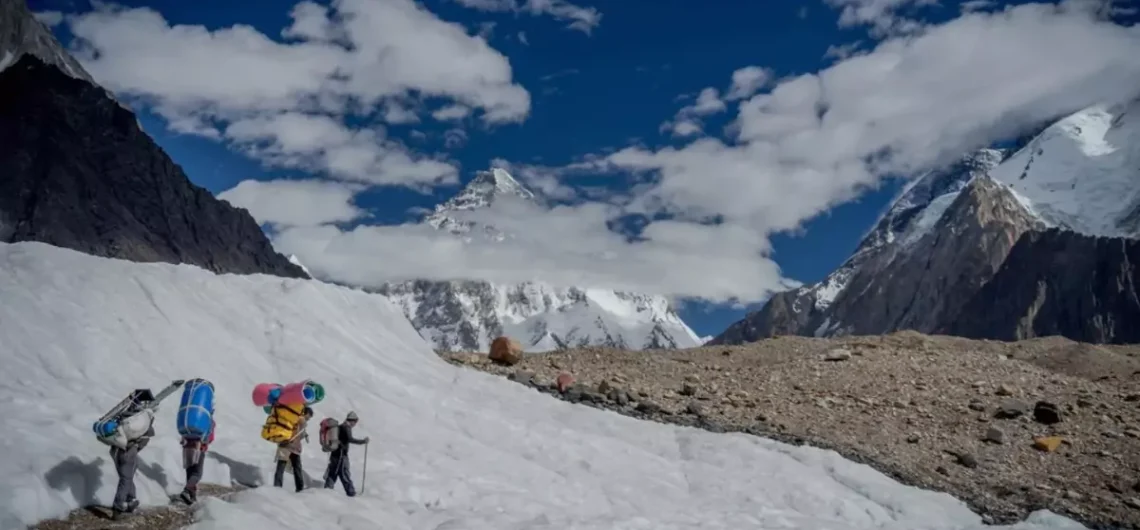
K2 Pakistan presents unique challenges that set it apart from other eight-thousanders. Located on the Pakistan-China border, this pyramid-shaped giant offers limited weather windows and extreme conditions year-round.
The mountain’s technical difficulty stems from sustained steep terrain, unpredictable weather patterns, and minimal margin for error. At the summit, climbers face only one-third of sea-level oxygen availability, making every decision critical.
Key Statistics That Define K2
- Height: 8,611 meters (28,251 feet)
- Location: Pakistan-China border
- First Ascent: July 31, 1954, by Italian expedition
- Overall Success Rate: Approximately 28% (2020-2024)
- Fatality Rate: 13-35% depending on route
K2 Climbing Routes: Choosing Your Path to the Summit
Abruzzi Spur (Standard Route)
The Abruzzi Spur remains the most popular K2 route, accounting for 75% of all successful ascents . This southeast ridge approach offers the best infrastructure and highest success rates.
Route Specifications:
- Technical Grade: V, AI4, M4
- Base Camp Elevation: 5,400m
- Success Rate: 28% (2020-2024)
- Fatality Rate: 13%
Key Challenges:
- House’s Chimney: 90-degree mixed climbing section
- Black Pyramid: 400-meter near-vertical wall
- Bottleneck Couloir: Final 60-degree ice slopes with serac danger
The route features four established camps with fixed rope systems, making logistics more manageable than alternative routes.
Česen Route (South-Southeast Spur)
The Česen Route merges with the Abruzzi at Camp 3, offering a more direct but technically demanding lower section.
Route Characteristics:
- Technical Grade: V, AI4, M4
- Success Rate: 22% (2020-2024)
- Fatality Rate: 18%
- Key Risk: Higher avalanche danger
This route suits experienced climbers seeking technical challenges beyond the standard route.
North Ridge (Chinese Side)
The North Ridge represents K2’s most remote and technically demanding approach, accessible only through China’s Xinjiang province.
Extreme Statistics:
- Technical Grade: VI, AI5, M5
- Success Rate: 8% (2020-2024)
- Fatality Rate: 35%
- Total Successful Ascents: Fewer than 15 documented
Political restrictions and extreme logistics make this route seldom attempted.
K2 Expedition Planning: Timeline and Requirements
18-Month Preparation Framework
Successful K2 expeditions require extensive advance planning. The preparation process typically follows this timeline:
18 Months Before:
- Physical conditioning baseline assessment
- Medical screening including cardiac stress testing
- Permit applications (Pakistani permits cost $5,000 for summer season)
- Expedition insurance procurement
12 Months Before:
- Technical skill development program
- Advanced mountaineering training completion
- Equipment procurement and testing
- Team formation and compatibility assessment
6 Months Before:
- Final medical clearances
- Equipment testing at altitude
- Detailed itinerary finalization
- Communication systems testing
Permit Requirements and Costs
Pakistani Side (Abruzzi/Česen Routes):
- Summer season permit: $5,000
- Processing time: 3-6 months
- Required documentation: Medical certificates, insurance proof, expedition plan
Chinese Side (North Ridge):
- Significantly higher costs
- Processing time: 6-12 months
- Group requirements: Minimum team sizes, mandatory liaison officer
- Political restrictions may cause sudden closures
Essential Gear and Equipment for K2 Expeditions
Layering System for Extreme Conditions
K2’s temperatures regularly drop below -40°C, requiring sophisticated layering systems.
Base Layer System:
- Synthetic underwear (2-3 pairs, non-cotton materials)
- Lightweight long underwear (Merino wool or synthetic blend)
- Heavyweight long underwear for extreme conditions
Insulation Requirements:
- Heavyweight down jacket (800+ fill power, integrated hood)
- Down suit for above Camp 2
- Insulated pants with wind-resistant shell
Shell Protection:
- Hard shell jacket (Gore-Tex or equivalent, pit vents essential)
- Hard shell pants (full side zips, reinforced cuffs)
High-Altitude Footwear
La Sportiva Olympus Mons Cube S (Recommended):
- Temperature rating: -40°C
- Dual BOA system for gloved operation
- Removable thermal booties
- Vibram sole technology for crampon compatibility
Oxygen Systems
Most K2 climbers use supplemental oxygen above 7,600m.
Poisk Systems (Traditional):
- Most reliable flow control
- Accurate delivery rates (2-4 LPM standard)
- Lightest system available
- Hard shell mask construction
TopOut Systems (Alternative):
- Less expensive than Poisk
- Widely available and refillable
- Soft shell mask design
- Adequate performance for most conditions
Shelter Systems
Hilleberg Expedition Tents (Recommended):
- Jannu: Two-person, 3.2kg packed weight
- Kerlon 1200 fabric, exceptional snow loading
- Four-season design with 9mm poles
- Proven performance in extreme conditions
IF you are Curious about the exact geography and history of K2’s location?
👉 Read our complete blog on where K2 is located.
K2 Acclimatization: The Science of High-Altitude Adaptation
Physiological Adaptation Process
High-altitude acclimatization involves complex physiological changes over several weeks:
Phase 1 (Days 1-14): Initial Adaptation
- Increased ventilation response
- Red blood cell production begins
- Plasma volume reduction
- Enhanced cardiac output
Phase 2 (Days 15-35): Technical Acclimatization
- Sleep progression following “climb high, sleep low”
- Camp 1 rotations (sleep at 6,050m)
- Technical climbing practice at altitude
- Equipment familiarity development
Phase 3 (Days 36-45): High-Altitude Adaptation
- Camp 2 sleep tolerance (6,700m)
- Brief Camp 3 exposure (7,200m)
- Final recovery before summit attempt
- Weather window preparation
Health Monitoring Protocols
SpO2 Monitoring Guidelines:
- Sea level baseline: 98-99% oxygen saturation
- High altitude threshold: 90% indicates significant hypoxemia
- Critical levels: 80% requires immediate descent consideration
Essential Monitoring Equipment:
- Pulse oximeters (under $30 devices)
- Heart rate monitors for trend analysis
- Temperature monitoring for hypothermia prevention
Seasonal Conditions and Weather Windows
Summer Season (June-August)
Summer offers the most favorable K2 climbing conditions:
Abruzzi Spur:
- Optimal conditions with established rope systems
- Temperatures still reach -50°C regularly
- Wind speeds can exceed 200 km/h
Alternative Routes:
- Česen Route faces higher rockfall danger due to warming
- North Ridge remains marginally accessible
Winter Conditions (December-March)
K2 winter climbing represents mountaineering’s ultimate challenge :
- Only the Abruzzi Spur has seen successful winter attempts
- Temperatures drop below -60°C with sustained winds
- Extremely limited weather windows
- Success rate drops dramatically
Safety Protocols and Risk Management
Medical Requirements
Mandatory Assessments:
- Cardiac evaluation: ECG, echocardiogram, stress testing
- Pulmonary function testing and sleep studies
- Ophthalmologic examination for retinal assessment
- Neurological baseline cognitive testing
Insurance Coverage
Critical Components:
- Emergency evacuation: Minimum $500,000 coverage
- Medical coverage for altitude illness treatment
- International repatriation for serious injuries
- Equipment coverage for gear loss/damage
Recommended Providers:
- Global Rescue: Comprehensive evacuation services
- IMG Travel Insurance: Medical and trip coverage
- Minimum altitude coverage: 6,000m+ required
Emergency Communication
Essential Systems:
- Satellite phones: Iridium or Inmarsat systems
- Personal locator beacons: 406 MHz emergency beacons
- VHF/UHF radios for team coordination
- Professional weather forecasting subscriptions
Recent Performance and Success Statistics
Record-Breaking Seasons:
- 2022: 200 summits (highest single-season record)
- 2023: 112 summits in single weather window
- 2024: 50 summits, 28% success rate
Critical Success Factors:
- Weather window timing (typically late July)
- Rope fixing coordination between teams
- Acclimatization schedule adherence
- Equipment reliability in extreme conditions
Route-Specific Statistics (2020-2024)
| Route | Total Ascents | Fatality Rate | Success Rate |
| Abruzzi Spur | 600+ | 13% | 28% |
| Česen Route | 80+ | 18% | 22% |
| North Ridge | 15 | 35% | 8% |
Cost Breakdown for K2 Expeditions
Pakistani Side Expeditions
Basic Expedition Costs:
- Permit Fees: Climbers must secure official climbing permits, which vary depending on the season and government regulations.
- Guide Services: Professional mountaineering guides and local support staff are essential for safety, navigation, and overall expedition management.
- Equipment and Gear: Specialized high-altitude gear, clothing, and climbing equipment are required to handle the extreme conditions of K2.
- Insurance: Comprehensive travel and climbing insurance is necessary to cover health, evacuation, and emergency situations.
- Travel and Logistics: This includes international flights, domestic transport, porters, food, and accommodation during the approach and trek.
Total Estimated Cost:
Overall expenses can vary widely depending on the level of support, services chosen, and the size of the team.
Chinese Side Expeditions
North Ridge expeditions cost significantly more due to:
- Higher permit fees and mandatory liaison officers
- Extended approach logistics (5-7 days to base camp)
- Limited supply chain infrastructure
- Political and administrative complexities
Choosing the Right Expedition Partner
When planning K2 expeditions, selecting experienced operators proves crucial:
Key Criteria:
- Proven K2 summit records
- Comprehensive safety protocols
- Quality equipment and logistics
- Experienced guide-to-client ratios
- Emergency response capabilities
Due Diligence Questions:
- How many K2 summits has the company facilitated?
- What are their safety and rescue protocols?
- How do they handle weather delays and emergencies?
- What level of support do they provide at high camps?
Training and Preparation Requirements
Physical Conditioning
Cardiovascular Base:
- 6-8 hours weekly aerobic training
- Altitude simulation or hypoxic training
- Load-carrying exercises with weighted packs
- Technical climbing skill maintenance
Strength Training:
- Core stability for heavy pack carrying
- Leg strength for sustained climbing
- Upper body strength for technical sections
- Flexibility and injury prevention
Technical Skills
Essential Competencies:
- Advanced ice climbing (WI4+ minimum)
- Mixed climbing techniques (M4+ minimum)
- Aid climbing for House’s Chimney
- High-altitude rescue techniques
- Crevasse rescue and glacier travel
Environmental Impact and Responsible Climbing
Leave No Trace Principles
K2 expeditions must follow strict environmental protocols:
Waste Management:
- All human waste must be packed out
- Equipment and food waste removal mandatory
- Minimal impact camping practices
- Respect for local communities and porters
Supporting Local Communities
Ethical Considerations:
- Fair wages for porters and support staff
- Supporting local businesses and guides
- Respecting cultural traditions and customs
- Contributing to community development projects
Future of K2 Climbing
Technology Advancements
Modern K2 expeditions benefit from improved:
- Weather forecasting accuracy
- Satellite communication systems
- Lightweight, high-performance equipment
- Medical monitoring devices
Climate Change Impact
Changing weather patterns affect K2 climbing:
- Altered precipitation cycles
- Modified jet stream interactions
- Increased rockfall and avalanche danger
- Shifting optimal climbing seasons
Conclusion
K2 climbing represents the pinnacle of mountaineering achievement, demanding exceptional preparation, skill, and commitment. Whether you’re researching K2 expeditions or planning your own attempt, thorough preparation and expert guidance remain essential for safe and successful outcomes.
If you are considering a K2 expedition, consult with experienced mountaineering professionals who can provide personalized guidance based on your experience level, goals, and risk tolerance. The Savage Mountain rewards those who approach it with respect, preparation, and unwavering dedication to safety protocols.
Ready to take the next step? At K2 Adventure, we connect climbers with expert guides, detailed expedition planning, and resources designed for safe and successful ascents. Learn more about us and start preparing for your journey to the Savage Mountain today.
Frequently Asked Questions
How difficult is K2 compared to Everest?
K2 requires significantly more technical climbing skill than Everest. While Everest has established infrastructure and longer weather windows, K2 features sustained technical terrain, unpredictable weather, and minimal room for error. The fatality rate on K2 (13-35% depending on route) exceeds Everest’s rate considerably.
What is the best time to climb K2?
The optimal K2 climbing season runs from late June through early August. Weather windows typically occur in late July, lasting 3-7 days. Winter ascents are extremely rare and dangerous, with only a handful of successful attempts in history.
Do I need previous 8,000-meter experience for K2?
While not strictly required, previous high-altitude experience significantly improves success chances. Most successful K2 climbers have summited at least one other 8,000-meter peak. The technical demands and extreme conditions make K2 unsuitable as a first high-altitude objective.
How long does a K2 expedition take?
Standard K2 expeditions require 45-60 days total, including:
- 5-7 days approach trek to Base Camp
- 35-45 days acclimatization and climbing
- 5-7 days return journey
Rapid ascent strategies can reduce this to 35-45 days but increase risk factors.
What permits are required for K2?
Pakistani side permits cost $5,000 for summer season and require 3-6 months processing time. Chinese side permits are significantly more expensive, require 6-12 months advance notice, and involve mandatory liaison officers and group minimums.
Is supplemental oxygen used on K2?
Most K2 climbers use supplemental oxygen above Camp 4 (7,600m). Modern oxygen systems like Poisk provide 2-4 liters per minute flow rates. Some elite climbers attempt K2 without oxygen, but this dramatically increases difficulty and risk.
Comments